Faster Access, Full Clinical Care, Better Patient Experience
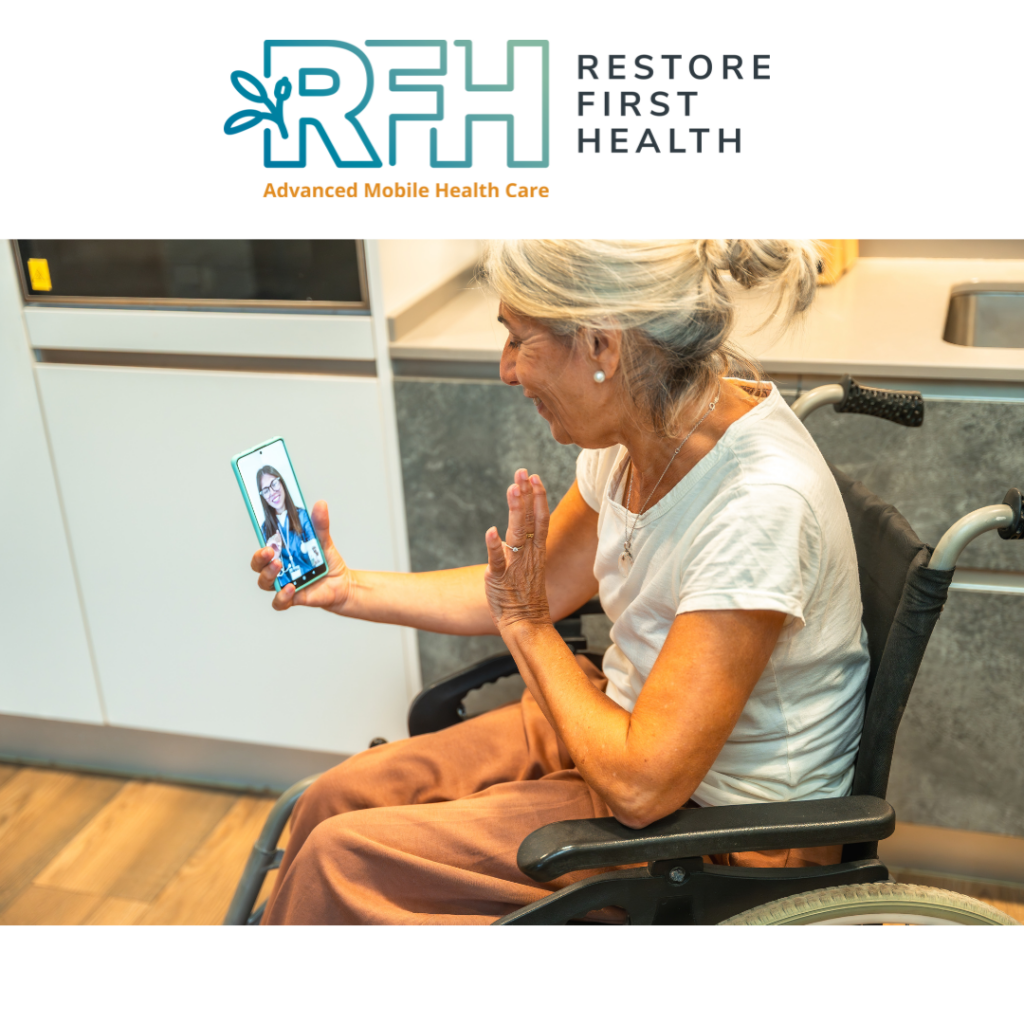
At Restore First Health, telehealth is a strategic access tool designed to get patients seen faster, reduce gaps in care, and support the whole person—clinically, socially, and logistically. AND the difference is…we do it with a nurse by your side.
What Is Assisted Telehealth?
Assisted telehealth combines:
- A remote advanced provider guiding the visit
- A clinician physically present with the patient
- Bedside diagnostics and assessments performed in the home
This hybrid approach allows us to deliver telehealth visits that closely mirror an in-person evaluation without asking patients to manage technology or wait weeks to be seen.
How We Use Telehealth Today
Right now, assisted telehealth is primarily used for:
- Initial wound care consults to reduce referral-to-evaluation delays
- Early triage for chronic or deteriorating wounds
- Lymphedema assessments and follow-ups requiring measurements
- Urgent clinical check-ins when rapid evaluation is needed
What Happens During an Assisted Telehealth Visit?
During an assisted telehealth visit, our team can:
- Complete a full medical and wound history
- Perform a guided physical assessment
- Conduct bedside ABI testing
- Perform mechanical debridement when appropriate
- Order labs, imaging, and additional diagnostics
- Select and initiate wound dressings and treatment plans
- Evaluate offloading devices, mattresses, and support surfaces
- Address nutrition, mobility, social barriers, and caregiver needs
If advanced hands-on intervention is required, we escalate quickly and schedule an in-home visit—often within days.
Three Reasons Our Assisted Telehealth Model Is Different
1. Faster Access to Care
Assisted telehealth allows patients to be evaluated sooner after referral, helping prevent deterioration and unnecessary complications. Instead of waiting weeks for a traditional clinic appointment, patients can be assessed usually within 48-hours and appropriately triaged.
2. Full Clinical Decision-Making
Patients receive the same clinical thinking as an in-person visit. Telehealth does not mean reduced assessment, and it means earlier intervention, with clear next steps.
3. Built for Older, High-Risk Patients
Patients don’t need smartphones, tablets, or technical skills. We bring the equipment and manage the visit. This removes anxiety, supports older adults, and reduces stress on families who already manage transportation, scheduling, and care coordination.
Why Assisted Telehealth Matters for Caregivers
Many of our patients rely on adult children or family members who are balancing work, caregiving, and logistics.
Assisted telehealth:
- Reduces missed workdays
- Allows coordination around dialysis or other treatments
- Minimizes unnecessary appointments on separate days
- Keeps care in the home and on schedule
For caregivers, this model doesn’t just save time—it reduces burnout.
The Bottom Line
Assisted telehealth is about doing the right things sooner, in the right setting, with the right level of support.
That’s how we reduce delays, protect patients, and make care feel connected!