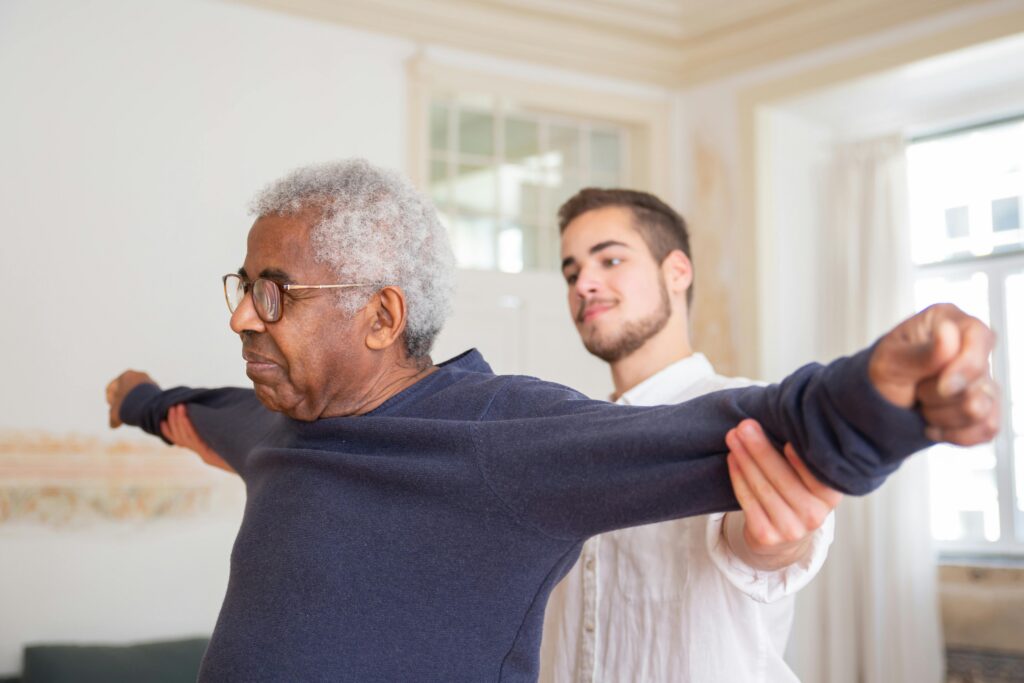
Living with lymphedema often raises an important question: Is exercise safe?
The answer is yes, when done correctly. Movement is an important part of managing lymphedema because the lymphatic system relies on muscle activity to help move lymph fluid through the body. Without regular movement, fluid can accumulate more easily in affected limbs.
At Restore First Health, our clinicians provide advanced lymphedema treatment and chronic condition care in the comfort of patients’ homes. Our teams help patients manage lymphedema swelling through personalized care plans that may include compression therapy, mobility guidance, lifestyle education, and monitoring of chronic conditions that impact lymphatic health.
Understanding how exercise, movement, and weight management affect the lymphatic system can help patients safely stay active while supporting long-term lymphedema management and overall health.
Click here to refer a patient, or yourself, for advanced mobile healthcare.
Wear Compression During Exercise
Compression garments play a crucial role in lymphedema management, especially during physical activity.
When muscles contract during exercise, fluid movement within the tissues increases. Wearing properly fitted compression garments helps support lymphatic flow and reduces the risk of fluid accumulation in the affected limb.
Patients are typically advised to:
- Wear compression sleeves, stockings, or wraps during exercise
- Ensure garments fit properly and are in good condition
- Consult a clinician if compression feels too tight or uncomfortable
Compression acts as external support for the lymphatic system, allowing patients to move more confidently and safely.
Watch: 3 Exercises for Lymphedema.
Start Low Intensity and Progress Gradually
One of the most important principles of exercise with lymphedema is gradual progression.
Beginning with low-intensity activity allows the body and lymphatic system to adapt without triggering excess swelling. Over time, patients can slowly increase the duration or intensity of activity based on how their body responds.
Helpful strategies include:
- Starting with short sessions, such as 10–15 minutes of activity
- Increasing duration before increasing intensity
- Adding new exercises slowly rather than all at once
Slow progression helps the lymphatic system adjust and reduces the risk of flare-ups.
Recommended Activities for Lymphedema
Certain types of movement are especially beneficial because they support circulation without placing excessive strain on the lymphatic system.
Walking
Walking is one of the safest and most accessible forms of exercise. It gently activates the muscles that assist lymphatic flow while supporting cardiovascular health.
Swimming or Water Exercise
Water naturally provides gentle compression and resistance. This combination can help reduce swelling while allowing for low-impact movement.
Yoga
Gentle yoga promotes flexibility, breathing control, and circulation. Slow, controlled movements make it a good option for many people with lymphedema.
Tai Chi
Tai Chi focuses on slow, deliberate movements and balance, which can help improve circulation and mobility.
Light Resistance Training
Light resistance exercises can support muscle strength when introduced gradually and performed with proper technique.
The key is choosing activities that are low impact, controlled, and sustainable over time.
Activities to Avoid or Approach Carefully
Certain activities may increase strain on the lymphatic system, particularly for individuals who are just beginning an exercise routine.
Examples include:
- High-impact activities such as jumping or intense running
- Heavy weightlifting early in a program
- Sudden increases in exercise intensity or duration
These activities may not always be permanently restricted, but they should be approached cautiously and introduced gradually under professional guidance.
Monitor the Body’s Response
Listening to the body is an important part of safe exercise with lymphedema.
Patients should monitor the affected limb after activity and watch for changes such as:
- Increased swelling
- Heaviness or tightness in the limb
- Skin discomfort or redness
If swelling significantly increases after activity, the recommendation is to reduce the intensity or duration of exercise and allow the limb time to recover.
Tracking how the body responds helps patients identify the level of activity that works best for them.
Lymphedema Care at Home
For many patients, regular monitoring and supportive care are essential to managing lymphedema effectively.
Restore First Health provides advanced medical care for chronic conditions, including lymphedema, in the comfort of patients’ homes, helping individuals receive timely support, education, and treatment without the burden of traveling to multiple appointments.
By combining clinical expertise, patient education, and personalized care, our teams help patients manage chronic conditions like lymphedema while maintaining independence and mobility.
Answers to the most common questions about exercise, weight management and lymphedema.
Yes, exercise is generally safe for people living with lymphedema when it is done correctly. Low-impact activities such as walking, swimming, yoga, and tai chi can help support lymphatic flow and improve mobility. It is important to wear compression garments during exercise, start with low-intensity activity, and gradually increase duration or intensity while monitoring the affected limb for swelling.
Low-impact, controlled activities are typically recommended for people with lymphedema. Walking, swimming, yoga, tai chi, and gentle resistance exercises can help promote circulation and support lymphatic drainage. Daily range-of-motion exercises can also help maintain flexibility and prevent stiffness in affected limbs.
Yes, maintaining a healthy weight can play an important role in managing lymphedema. Excess body weight can place additional strain on the lymphatic system and worsen swelling. Research shows that even modest weight loss may improve lymphedema symptoms and overall outcomes. Many patients benefit from guidance from a dietitian or weight management program as part of their care plan.
Click here to refer a patient, or yourself, for advanced mobile healthcare.
Follow us on social media for more health tips, videos and education.
Schmitz KH, Ahmed RL, Troxel AB, et al.
Weight Lifting in Women with Breast-Cancer–Related Lymphedema.
https://link.springer.com/article/10.1007/s11764-011-0203-9
Wounds International.
Best Practice for the Management of Lymphoedema.
https://woundsinternational.com/wp-content/uploads/2023/02/content_11080.pdf
National Center for Biotechnology Information (NCBI).
Exercise and Lymphedema Management Research Review.
https://pmc.ncbi.nlm.nih.gov/articles/PMC11977414/