Nearly 70 percent of patients living with chronic wounds are over the age of 65. One of the most overlooked reasons wounds struggle to heal is limited mobility.
When patients become bedbound or chairbound, circulation slows. Muscles weaken. Pressure increases. Healing becomes more difficult.
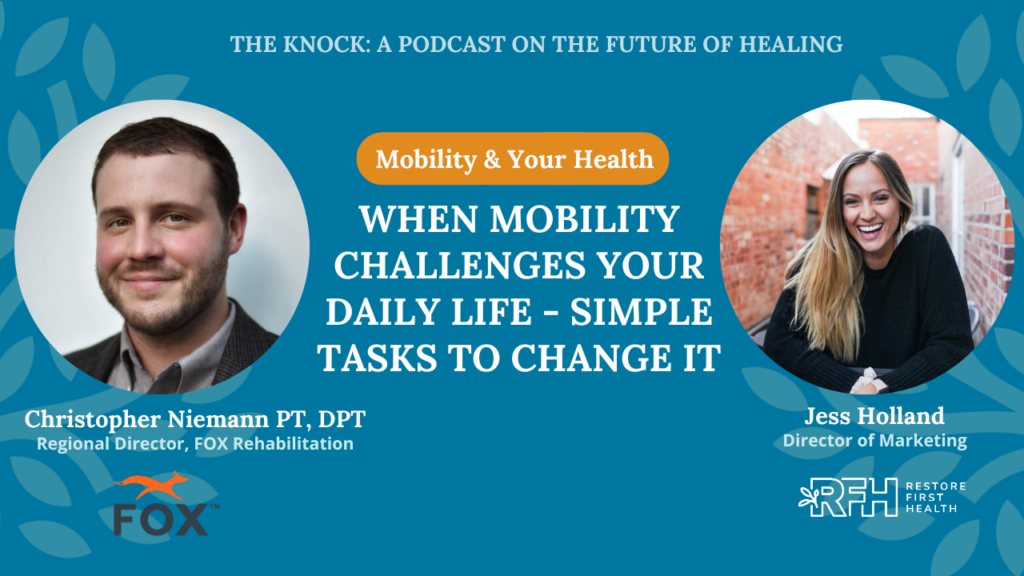
In a recent episode of The Knock, we sat down with Dr. Christopher Niemann, PT, DPT, of Fox Rehab to talk about a powerful truth:
Mobility is not optional in wound healing. It is foundational.
Watch: The Knock | When Mobility Challenges Your Daily Life – Simple Tasks to Change it
Why Is Mobility So Important for Wound Healing?
When the body is not moving, blood flow decreases. Poor circulation limits oxygen and nutrient delivery to tissues, both of which are essential for wound healing.
Limited mobility can also lead to:
- Increased pressure injuries
- Swelling and fluid retention
- Muscle atrophy
- Higher fall risk
- Worsening chronic conditions
For older adults, especially those managing diabetes, vascular disease, or chronic swelling, movement becomes even more critical.
The good news is that movement does not have to be intense to be effective.
What Exercises Can Seniors Do at Home to Improve Circulation?
One of the biggest misconceptions about physical therapy is that exercises need to be complicated or strenuous. For patients with limited mobility, simple and consistent movement is often enough to make a meaningful impact.
Dr. Niemann emphasizes starting small and building from what the patient can safely do.
If someone is bedbound, that might begin with:
- Toe movement: Even wiggling the toes activates lower leg muscles and stimulates circulation.
- Ankle pumps: Flexing and pointing the feet repeatedly helps push blood back toward the heart and reduce swelling. A simple routine of 10 to 20 repetitions every hour can significantly support circulation.
- Alphabet ankle exercise: Using the big toe to write the alphabet in the air moves the ankle in multiple directions and engages lower leg muscles more dynamically.
- Heel slides: Sliding the heel up and down the bed strengthens the knees and hips while promoting joint mobility.
- Hip bridges: With feet planted on the bed, gently lifting the hips engages the legs and core, supports bed mobility, and helps reduce lower back strain.
These movements may seem small, but when done consistently, they can help prevent complications, improve comfort, and support healing.
Can You Heal a Wound if You Are Bed bound?
Yes, but mobility must be part of the care plan.
Even patients who cannot stand or walk can still improve circulation, strengthen muscles, and reduce pressure risk through guided movement.
The key is personalization.
Every patient’s diagnosis, pain level, and functional ability are different. That is why working with a physical therapist or mobile healthcare provider can help determine:
- What movements are safe
- How often exercises should be performed
- How caregivers can assist
- When to progress the routine
At Restore First Health, mobility is considered an essential part of comprehensive in-home care, especially for patients with chronic wounds or swelling.
How Do You Stay Consistent with At-Home Exercises?
One of the most common challenges patients and caregivers face is compliance.
Starting is hard. Staying consistent is harder.
Dr. Niemann explains that motivation often comes down to personalization and accountability.
Some patients respond well to:
- Written checklists
- Scheduled routines
- Involving caregivers
- Following guided video exercise sessions
- Having an exercise partner
- Ongoing wellness support after formal therapy ends
For many older adults, it starts with hope. Seeing that others in their age group are regaining strength and independence can shift mindset from decline is inevitable to improvement is possible.
And that mindset matters.
The Role of Caregivers in Supporting Mobility
Caregivers play a critical role in healing.
When caregivers are involved in mobility routines, patients are more likely to:
- Perform exercises consistently
- Stay accountable
- Feel supported
- Progress safely
Mobility does not just improve circulation. It improves confidence. Confidence improves participation.
That ripple effect supports better healing outcomes.
When Should You Call a Physical Therapist?
If a patient is:
- Struggling to move safely
- Experiencing frequent falls
- Living with a non-healing wound
- Managing chronic swelling or vascular disease
- Unsure what exercises are appropriate
It may be time to involve a physical therapist.
Mobile physical therapy and mobile advanced care models allow clinicians to assess patients in their real home environment, where functional challenges actually occur.
This approach removes transportation barriers and helps tailor exercises to real-world needs.
Healing at Home Starts with Movement
Mobility is one of the most powerful and most underutilized tools in chronic wound care.
It does not require a gym.
It does not require heavy equipment.
It does not require hours of effort.
It requires consistency, support, and the right care plan.
At Restore First Health, we believe advanced care should meet patients where they are, and that includes helping them move safely, confidently, and consistently at home.
If you or a loved one is living with limited mobility and a chronic wound, do not overlook the power of small movements.
They may be the first step toward healing.
Click here to refer a patient, or yourself, for advanced mobile healthcare.
Follow us on social media for more health tips, videos and education.