
It often starts quietly. A little tingling in the toes. A burning sensation at night. Maybe your feet feel numb in the morning, or strangely sensitive to the touch of a bedsheet. Many people dismiss these changes as normal aging.
But in many cases, these early symptoms are signs of peripheral neuropathy, nerve damage that most commonly begins in the feet.
At Restore First Health, we frequently see patients in their homes who didn’t realize that subtle foot changes were early warning signs. By the time wounds develop or balance becomes unstable, the nerve damage has often been progressing for years.
Understanding neuropathy in the feet early can prevent serious complications later.
What Is Peripheral Neuropathy?
Peripheral neuropathy is damage to the peripheral nerves, the nerves outside of the brain and spinal cord. These nerves control:
- Sensation (touch, pain, temperature)
- Muscle movement
- Autonomic functions (blood flow, sweating)
When these nerves are damaged, signals between the brain and the body become disrupted. The feet are often affected first because the longest nerves in the body travel to the toes.
What Does Neuropathy in the Feet Feel Like?
Neuropathy pain is very different from muscle soreness or joint pain. It is nerve-driven.
Patients often describe it as burning, electric, stabbing, or deeply aching. For many, symptoms are worse at night. Others experience tingling or a persistent pins-and-needles sensation. Some lose sensation entirely.
That loss of feeling is often the most dangerous symptom.
When protective sensation fades, a person may not feel a blister forming, a shoe rubbing, or a small cut on the bottom of the foot. Without early detection, those minor injuries can turn into serious wounds.
This is one of the reasons Restore First Health emphasizes routine foot assessments during in-home visits for patients living with diabetes and other chronic illnesses.
The Link Between Diabetic Neuropathy and Foot Complications
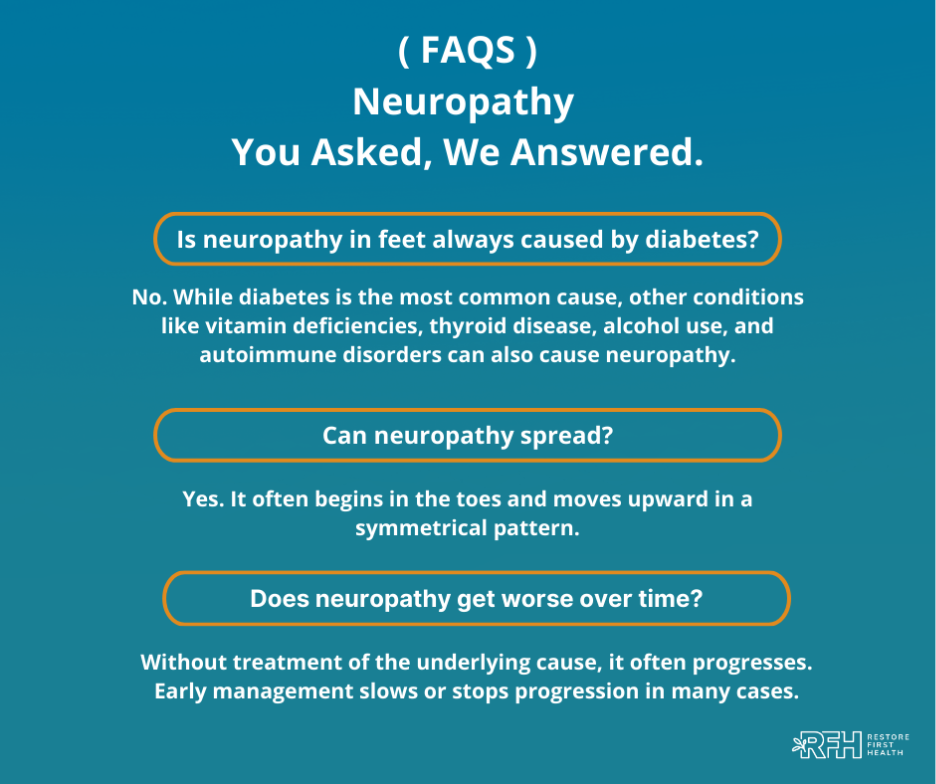
Diabetes is the leading cause of peripheral neuropathy in the United States.
Over time, elevated blood sugar damages both nerves and the tiny blood vessels that nourish them. The result is gradual nerve injury, often beginning in the feet.
Diabetic neuropathy doesn’t happen overnight. It develops slowly, and early symptoms may be mild enough to ignore. But as sensation declines, the risk of ulcers, infection, and even amputation increases significantly.
Many of the chronic wounds treated by Restore First Health are directly connected to neuropathy-related sensory loss. When a patient cannot feel pressure or trauma, injuries go unnoticed until they become advanced.
That’s why early screening and monitoring matter.
What Causes Peripheral Neuropathy Besides Diabetes?
Although diabetic neuropathy is the most common type, it is not the only cause.
Vitamin B12 deficiency, thyroid disorders, kidney disease, alcohol misuse, autoimmune conditions, certain medications, and even unknown factors can all contribute to nerve damage.
This is why proper evaluation is essential. At Restore First Health, we treat the patient as a whole, often pinpointing the underlying cause, and creating a treatment plan to address the root issue.
Can Neuropathy Be Reversed?
The answer depends on the cause.
If neuropathy is related to a vitamin deficiency or medication effect, early treatment may improve symptoms. In cases of diabetic neuropathy or long-standing nerve damage, full reversal is unlikely, but progression can often be slowed.
The primary goals are to manage symptoms, protect the feet, and prevent complications.
Pain management may include medications that calm nerve signaling. Blood sugar control plays a critical role in diabetic neuropathy. Most importantly, proactive foot care reduces the risk of ulcers and infection.
Why Early Care Matters
Peripheral neuropathy is not just about discomfort. It is about protection.
When sensation decreases, the body loses its natural warning system. Without that system, even small injuries can escalate quickly.
Early evaluation allows for:
- Identification of underlying causes
- Improved blood sugar management
- Pain control
- Fall risk reduction
- Prevention of wound development
For patients with mobility limitations or transportation barriers, in-home evaluation removes a major obstacle to early care. Restore First Health focuses on treating patients in the comfort of their home, to avoid complications and reduce hospital readmissions.
When Should You Seek Evaluation?
If you notice persistent numbness, tingling, burning pain, balance issues, or wounds that are slow to heal, it’s important to seek medical evaluation.
The earlier neuropathy is identified, the more options exist to slow its progression and protect long-term health.
The Takeaway
Peripheral neuropathy in the feet is common, especially among individuals living with diabetes and chronic conditions. What begins as mild tingling can eventually affect mobility, wound healing, and overall quality of life.
The key is not waiting.
Early recognition, proper diagnosis, and consistent foot monitoring dramatically reduce the risk of serious complications.
At Restore First Health, our focus is proactive, in-home evaluation and advanced care for patients at risk of neuropathy-related wounds, because prevention is always more powerful than reaction.
Click here to refer a patient, or yourself, for advanced mobile healthcare.
Follow us on social media for more health tips, videos and education.
- England, J.D., et al. (2008). Diagnostic approach to peripheral neuropathy. Annals of Indian Academy of Neurology.
https://journals.lww.com/annalsofian/fulltext/2008/11020/Diagnostic_approach_to_peripheral_neuropathy.4.aspx
- Staff, N.P., et al. (2015). Peripheral neuropathy: Diagnosis and management. Mayo Clinic Proceedings.
https://www.sciencedirect.com/science/article/pii/S002561961500378X
- Hanewinckel, R., et al. (2020). Peripheral Neuropathy: Evaluation and Differential Diagnosis. American Family Physician.
https://www.aafp.org/pubs/afp/issues/2020/1215/p732.html
- Vinik, A.I., et al. (2005). Diabetic neuropathies. Clinical Diabetes.
https://diabetesjournals.org/clinical/article-abstract/23/1/9/1269