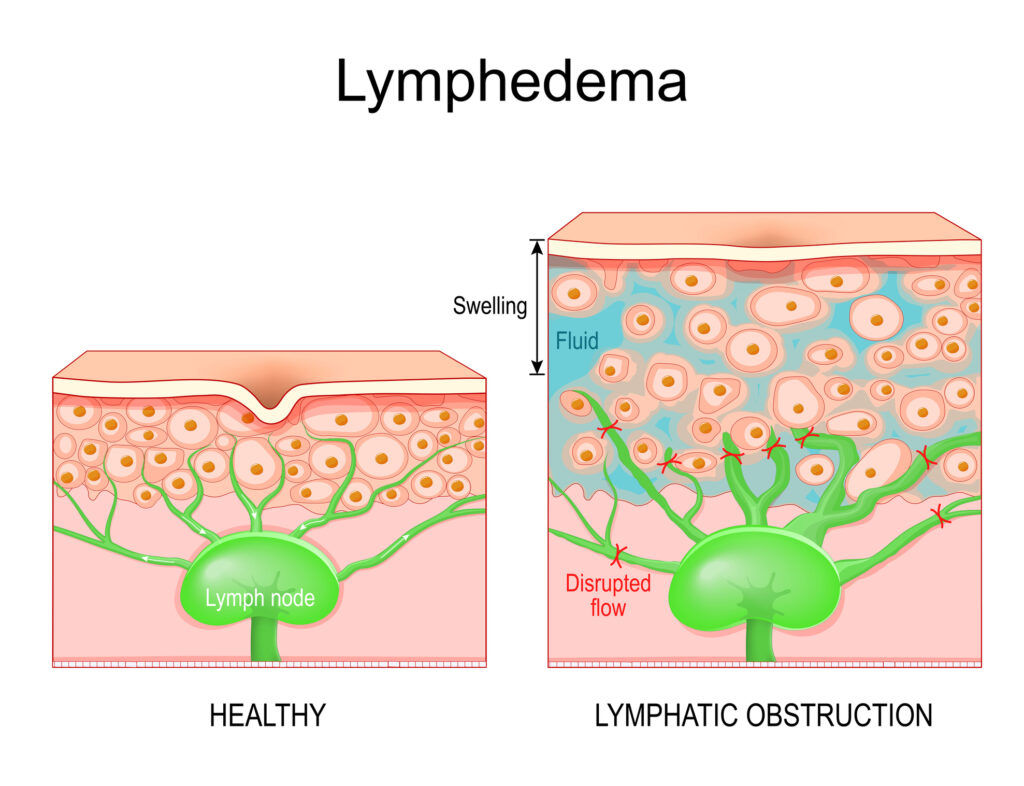
Lymphedema is a chronic condition caused by a disruption in the lymphatic system, leading to the buildup of lymph fluid and persistent swelling, most commonly in the arms or legs. While lymphedema is often progressive, early identification and consistent management can significantly slow its advancement and reduce complications.
Understanding the stages of lymphedema helps patients, caregivers, and providers recognize changes early and take appropriate action before swelling becomes harder to manage.
Check out our mobile lymphedema services.
What Is Lymphedema?
The lymphatic system plays a critical role in fluid balance and immune function. When lymph vessels or lymph nodes are damaged, due to surgery, cancer treatment, infection, trauma, or chronic venous disease, fluid may no longer drain properly. Over time, this leads to swelling, tissue changes, and increased risk for infection and skin breakdown.
Lymphedema can affect daily mobility, independence, and quality of life, especially if left untreated.
The Four Stages of Lymphedema
Stage 0: Latent (Subclinical) Lymphedema
In Stage 0, the lymphatic system has been impaired, but visible swelling has not yet appeared.
Patients may notice:
- A feeling of heaviness or tightness
- Subtle discomfort or fatigue in the limb
- Changes that come and go
Because swelling is not yet obvious, this stage is often overlooked. However, early education and monitoring at this stage can help prevent progression.
Stage 1: Reversible Lymphedema
At Stage 1, swelling becomes visible but is still considered reversible.
Common features include:
- Soft swelling that pits when pressed
- Swelling that improves with elevation or overnight rest
- Minimal or no skin changes
With proper compression, movement, and education, many patients can maintain stability at this stage.
Stage 2: Spontaneously Irreversible Lymphedema
In Stage 2, swelling becomes more persistent and no longer fully resolves with elevation.
Patients may experience:
- Firmer or fibrotic tissue
- Reduced pitting
- Increased discomfort or tightness
- Higher risk of skin breakdown or infection
Consistent compression therapy and ongoing clinical support are essential to prevent further progression and complications.
Stage 3: Lymphostatic Elephantiasis
Stage 3 is the most advanced form of lymphedema and is associated with significant tissue and skin changes.
This stage may include:
- Severe, irreversible swelling
- Thickened, hardened skin
- Skin folds, hyperkeratosis, or papilloma
- Recurrent infections and limited mobility
Management at this stage focuses on controlling swelling, protecting skin integrity, and supporting mobility and safety.
Why Early and Ongoing Care Is So Important
Lymphedema does not typically improve on its own. Without appropriate management, swelling can worsen over time, increasing the risk of:
- Cellulitis and other infections
- Chronic wounds
- Pain and reduced mobility
- Hospitalizations related to complications
Early identification and consistent care, especially compression therapy, play a key role in slowing disease progression and maintaining quality of life.
How Mobile Lymphedema Care Supports Patients
For many individuals living with lymphedema, traveling to frequent appointments can be difficult due to mobility limitations, transportation barriers, or other chronic conditions.
Restore First Health supports patients by delivering coordinated lymphedema care in the comfort of their home, helping reduce barriers while encouraging adherence to treatment.
In-home lymphedema care may include:
- Clinical evaluation and measurement of swelling
- Fitting for adjustable compression designed for daily movement
- Education on proper wear, skin care, and long-term management
- Ongoing follow-up to support consistency and answer real-life questions
By meeting patients where they are, in-home care helps support mobility, comfort, and long-term stability, especially for those managing lymphedema alongside other chronic conditions.
Living Well With Lymphedema
While lymphedema is a lifelong condition, many patients can remain active and independent with the right education, compression support, and ongoing care. Understanding the stages of lymphedema empowers patients and caregivers to act early, before swelling becomes harder to manage.
Follow us on social media for more health tips, videos and education.
- Rockson, S. G. (2018). Lymphedema. Journal of Clinical Investigation, 128(3), 873–880. https://pmc.ncbi.nlm.nih.gov/articles/PMC5891654/
- Johns Hopkins Medicine. Treating Lymphedema. https://www.hopkinsmedicine.org/health/treatment-tests-and-therapies/treating-lymphedema
- Lymphatic Education & Research Network (LE&RN). Stages of Lymphedema. https://lymphnet.org/page/stages-of-lymphedema