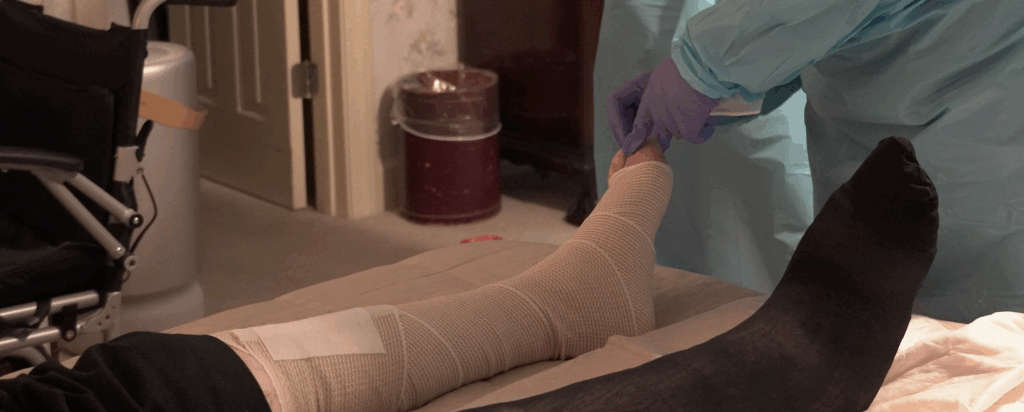
Learning you have lymphedema, or even hearing the word for the first time, can feel overwhelming. You might notice swelling in your arm, leg, or another part of your body and wonder what’s happening. In this article, we’ll break down what lymphedema is, what causes it, and why early care matters for healing and quality of life.
Watch: How Restore First Health brings Lymphedema care to the patient’s home.
What Is Lymphedema?
Lymphedema is a condition where fluid, called lymph, builds up in the soft tissues of the body because the lymphatic system isn’t draining properly. The lymphatic system is part of your immune and fluid-management network, made up of lymph nodes, vessels, and organs that help move fluid back into your bloodstream.
When this system becomes blocked or damaged, fluid collects and causes swelling, discomfort, and a feeling of heaviness. Lymphedema is typically chronic, meaning it can be managed but not fully cured. However, with the right care and consistent treatment, symptoms can be significantly reduced.
Types of Lymphedema
Primary Lymphedema:
This type is caused by problems within the lymphatic system itself. It’s often hereditary or present from birth, though it might not appear until later in life.
Secondary Lymphedema:
This is the most common type. It develops after damage to the lymphatic system from surgery, radiation, infection, trauma, or certain cancers. Secondary lymphedema can also occur after removal of lymph nodes, such as during breast or pelvic cancer treatment.
Sign up for our newsletter for more health tips, videos and more.
What Causes Lymphedema?
There are several reasons the lymphatic system might stop draining properly:
- Damage or Blockage of Lymph Vessels or Nodes:
Cancer treatments, infections, or injuries can block normal lymph flow, leading to swelling. - Surgical Removal or Radiation Therapy:
Procedures that remove or damage lymph nodes (for example, during cancer treatment) can trigger lymphedema in the surrounding area. - Infection:
Certain infections cause inflammation that restricts lymph flow. In some parts of the world, parasitic infections like filariasis are a leading cause. - Congenital or Genetic Causes:
Some people are born with underdeveloped or missing lymphatic vessels, causing fluid buildup over time. - Obesity or Limited Mobility:
Excess body weight and reduced movement can increase the burden on lymphatic circulation.
Signs and Symptoms
Lymphedema usually develops slowly. Early recognition is key. Common signs include:
- Swelling in an arm, leg, hand, or foot
- A feeling of heaviness, tightness, or restricted movement
- Changes in the texture or appearance of the skin
- Clothing, shoes, or jewelry feeling tighter
- Recurrent skin infections or slow wound healing
Read: “Is This Swelling Normal?”: Early Signs of Lymphedema You Shouldn’t Ignore
Why Early Treatment Matters
Left untreated, lymphedema can cause permanent tissue changes, recurring infections, and a decrease in mobility. The stagnant fluid can also lead to inflammation and hardening of the skin.
Early treatment—such as compression therapy, manual lymph drainage, exercise, and good skin care—can greatly reduce symptoms and prevent progression.
At Restore First Health, our Mobile Lymphedema Care Program brings advanced treatment directly to patients’ homes, helping them manage symptoms safely and effectively. Our team of wound and lymphatic specialists provide the education, support, and follow-up needed to improve circulation and promote healing where it matters most—at the bedside.
Final Thoughts
Lymphedema is more than just swelling, it’s a chronic condition that requires ongoing care and attention. With early intervention, lifestyle support, and consistent therapy, patients can live comfortably and regain confidence in their daily lives.
If you or a loved one are showing signs of lymphedema, request a consult today to learn how Restore First Health can help.
Follow us for more health news, tips and stories.
- National Institutes of Health. Lymphedema. MedlinePlus. Retrieved from https://medlineplus.gov/lymphedema.html
- National Cancer Institute. Lymphedema and Cancer Treatment. Retrieved from https://www.cancer.gov/about-cancer/treatment/side-effects/lymphedema
- National Center for Biotechnology Information. Lymphedema: Pathophysiology, Diagnosis, and Treatment. StatPearls. Retrieved from https://www.ncbi.nlm.nih.gov/books/NBK537239/
- National Heart, Lung, and Blood Institute. Advances and Challenges in Treating Lymphedema. Retrieved from https://www.nhlbi.nih.gov/news/advances-and-challenges-treating-lymphedema
- MedlinePlus Magazine. Lymphedema: Living with Swelling and Stiffness. Retrieved from https://magazine.medlineplus.gov/article/lymphedema-living-with-swelling-and-stiffness